Finding the right denture adhesive can transform your daily experience from constant worry to confident comfort. Whether you’re new to wearing dentures or looking to switch products, choosing the best adhesive for dentures doesn’t have to feel overwhelming.
Many denture wearers struggle with loose-fitting prosthetics that slip, slide, or cause embarrassing moments during meals or conversations. The good news? Today’s denture adhesives offer remarkable holding power and comfort when you know what to look for.
This guide walks you through everything you need to know about selecting the perfect adhesive for your lifestyle, budget, and specific needs.
Why Choosing the Right Denture Adhesive Matters
Your denture adhesive does more than just keep your prosthetics in place. It creates a barrier between your gums and the hard acrylic material, reducing irritation and sore spots that can make wearing dentures unbearable.Confidence in social situations becomes possible when you trust your adhesive. No more avoiding certain foods or speaking quietly to prevent embarrassing slips. The right product lets you eat, laugh, and talk naturally. Comfort throughout the day improves dramatically with proper adhesion. When dentures move constantly, they create friction points that lead to painful ulcers and raw spots. A quality adhesive minimizes this movement. Better oral health results from stable dentures that don’t trap food particles or create spaces where bacteria can accumulate. This reduces your risk of gum infections and bad breath. Nutritional benefits increase when you can chew effectively. Many denture wearers avoid healthy foods like apples, corn, or nuts because their prosthetics don’t stay secure. Good adhesion opens up your dietary options.
Types of Denture Adhesives (Creams, Powders, Strips, Pads)
Understanding your options helps you make an informed decision about the best denture adhesive for your specific situation.
Denture Creams
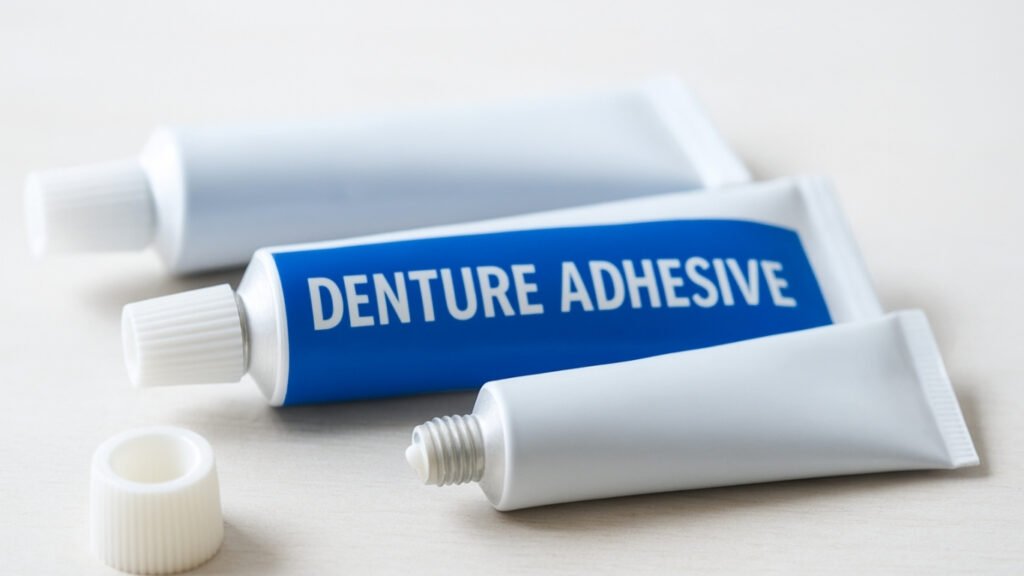
Creams remain the most popular choice among US denture wearers. These zinc-based or zinc-free formulas provide strong, all-day hold while being relatively easy to apply and remove. Advantages: Strong holding power, long-lasting comfort, works well for both upper and lower dentures Best for: Daily wear, active lifestyles, eating tough foods
Denture Powders
Powder adhesives offer excellent control over application amounts. You sprinkle the powder onto clean, damp dentures and bite down to activate the hold. Advantages: Less messy application, economical usage, good for sensitive mouths Best for: Light to moderate hold needs, cost-conscious users
Adhesive Strips and Pads
Pre-cut strips eliminate guesswork about application amounts. These thin, flexible materials conform to your denture’s shape and dissolve gradually throughout the day. Advantages: Precise dosing, clean application, travel-friendly Best for: Beginners, travel situations, upper dentures
Cushion Pads
Soft pads provide both adhesion and cushioning. They’re particularly helpful for dentures that don’t fit perfectly or gums that are still healing after extractions. Advantages: Extra comfort, padding for sore spots, moderate hold Best for: New denture wearers, poorly fitting prosthetics, sensitive gums
What to Look For in the Best Adhesive for Dentures
Hold Strength
The strongest denture adhesive should keep your prosthetics secure for 8-12 hours under normal conditions. Look for products that specifically mention “all-day hold” or “12-hour protection.”
Consider your activity level when evaluating hold strength. If you’re active, eat challenging foods, or talk frequently for work, you’ll need maximum-strength formulas.
Test different products during less demanding days first. This lets you gauge performance without risking embarrassment during important events or meetings.
Comfort and Fit
Comfort depends on more than just staying power. The best adhesive for dentures should feel smooth and natural in your mouth, not gritty or thick.
Some people are sensitive to certain ingredients. Zinc-free formulas work well for those concerned about zinc intake, while others prefer traditional zinc-based products for their superior hold.Denture adhesive for lower dentures often requires different properties than upper denture products. Lower prosthetics typically need stronger hold due to tongue movement and gravity.
Taste and Texture
Nobody wants to taste their adhesive all day. Quality products should be virtually tasteless after the initial application period.
Texture matters for comfort and confidence. Creams should spread smoothly without lumps, while powders should mix evenly with saliva to create a consistent seal.
Avoid products with strong flavors or artificial tastes that interfere with food enjoyment. Your adhesive should be invisible to your taste buds within minutes of application.
Ease of Cleaning
End-of-day removal shouldn’t require aggressive scrubbing that damages your dentures or irritates your gums. The best products hold firmly during wear but release easily with warm water and gentle brushing.
Look for adhesives that don’t leave stubborn residue on your dentures or gums. Leftover adhesive can harbor bacteria and create unpleasant tastes or odors.
Some products include special removal instructions or recommend specific cleansers. Factor these requirements into your decision, especially if you prefer simple routines.
Safety and Ingredients
Read ingredient lists carefully, particularly if you have allergies or health concerns. Some people need to avoid zinc, while others are sensitive to dyes or preservatives.
FDA-approved products offer safety assurance, but individual reactions can still occur. Start with small amounts of any new adhesive to test for sensitivity.
Consider interactions with medications or medical conditions. If you have questions about specific ingredients, consult your dentist or pharmacist before trying new products.
Top Recommendations for US Denture Wearers
When reviewing denture adhesive reviews, several categories of products consistently receive positive feedback from American users.
For Maximum Hold
Users seeking the strongest possible adhesion often prefer cream formulas with zinc. These products typically provide 12+ hours of secure hold, even during challenging activities like eating sticky foods or vigorous talking.
For Sensitive Users
Zinc-free formulas and natural ingredient products work well for people with sensitivities. These adhesives offer good hold while minimizing potential reactions.
For Budget-Conscious Buyers
Powder adhesives generally offer the best value per application. A single container often lasts 2-3 months with daily use, making them economical choices for fixed-income users.
For Convenience
Strip and pad products excel in travel situations or for users who struggle with dexterity issues. Pre-measured doses eliminate waste and mess.
Tips for Applying and Removing Denture Adhesive Safely
Application Best Practices
Start with clean, dry dentures. Any moisture or debris interferes with adhesion and can cause uneven application. Use the right amount. More adhesive doesn’t equal better hold. Excess product can ooze out and create discomfort or interfere with bite alignment. Apply in dots or strips. For creams, place small dots about half an inch apart along the denture’s edge. Avoid putting adhesive near the center where it might contact your palate uncomfortably. Press and hold. After positioning your dentures, bite down gently and hold for 10-15 seconds. This activates the adhesive and creates proper initial bonding.
Safe Removal Techniques
Rinse with warm water to begin loosening the adhesive. Avoid forcing dentures out, which can damage your gums or the prosthetics themselves. Gentle rocking motion helps release stubborn adhesive. Work slowly and patiently rather than pulling aggressively. Clean thoroughly both your dentures and gums after removal. Use a soft brush and denture cleanser to remove all adhesive residue.
When to Seek Professional Help
If you’re using excessive amounts of adhesive or reapplying multiple times daily, your dentures may need adjustment. A proper-fitting prosthetic should need only minimal adhesive for security.
Pain, persistent sore spots, or difficulty removing adhesive warrant a dental consultation. These symptoms might indicate fit problems or allergic reactions.
Common Mistakes to Avoid
Using Too Much Product
Overloading your dentures with adhesive creates problems rather than solutions. Excess product can cause uneven bite patterns, interfere with speech, and create messy situations during meals.
The denture cream vs powder debate often centers on ease of measuring. Creams require more careful dosing to avoid waste and discomfort.
Ignoring Expiration Dates
Old adhesive loses effectiveness and may develop unpleasant tastes or textures. Replace your products regularly, even if containers aren’t empty.
Poor Storage Practices
Heat and humidity damage adhesive properties. Store products in cool, dry places and ensure caps are tightly sealed after each use.
Skipping Daily Cleaning
Adhesive buildup on dentures or gums can cause irritation and reduce future adhesion effectiveness. Clean thoroughly every day, even when switching between products.
Applying to Wet Surfaces
Saliva or water prevents proper adhesive bonding. Always dry your dentures completely before applying any product.
Rushing the Process
Taking time during application and removal prevents problems and ensures better results. Hurried application leads to poor adhesion and potential discomfort.
Final Thoughts & Next Steps
Finding the best adhesive for dentures requires some experimentation, but the payoff in comfort and confidence makes the effort worthwhile. Start with your specific needs – whether that’s maximum hold, sensitivity concerns, or budget considerations – and try products within that category.
Remember that your perfect adhesive might change over time as your mouth adjusts or your dentures age. What works best today might not be ideal six months from now, and that’s perfectly normal.
Don’t be afraid to ask your dentist for recommendations based on your specific prosthetic type and oral health situation. They can often suggest products that work particularly well with your denture material or style.
The journey to comfortable denture wear is personal and unique. With patience and the right adhesive choice, you can return to eating, speaking, and smiling with complete confidence. Your quality of life doesn’t have to be limited by loose or uncomfortable prosthetics.
Take your time exploring options, start with small quantities to test effectiveness, and remember that finding your perfect match is an investment in your daily comfort and peace of mind.